Scottish Adventure

Updated: Apr 20
In the final two years of high school, I enrolled at Northland Community and Technical College and earned an Associate's degree via post-secondary enrollment options. During the Spring semester, I talked with my art professor, John Leopold, about a trip to Scotland. He mentioned the possibility of traveling there, and I was enthusiastic about making it happen. He said that if I could find 10 students interested, the trip would proceed. In the end, 19 students participated in the trip, and I was the only one still technically a high school student.
Hospitalfield House - Arbroath, Angus
We stayed at Hospitalfield House for the first week of our stay in Scotland. We were free to explore the town of Arbroath, with quick access to the North Sea. There were lovely meals featuring salads from the garden, and I got to try shark for the first time. Learning about the history of this stunning property was a wonderful experience.
Hospitalfield House is a 19th-century Arts and Crafts estate and residential art center located in Arbroath, Angus. Renowned as one of Scotland's most significant historic artist houses, it sits on the site of a hospital built in 1260 to support the new Benedictine Abbey in Arbroath. In 1664, after the reformation, the Reverend James Fraser bought the estate, and in 1843, the artist Patrick Allan met and married Elizabeth Fraser. In 1902, in line with the terms of their bequest, Hospitalfield became an art school and later developed into a postgraduate residential college.
History
In 1260, the Tironensian Benedictine order of monks built a hospital that was later converted into a monastery overlooking the North Sea to accommodate the many pilgrims traveling by sea and land to their new abbey at Arbroath. After the Reformation, the estate became privately owned and was purchased in 1664 by the Reverend James Fraser, Minister of Arbroath, remaining in the Fraser family until 1890. In 1813, Walter Scott visited the site and was inspired to write his novel, "The Antiquary," published in 1816. The home of The Antiquary, Monkbarns, was modeled after Hospitalfield. Artist Patrick Allan was commissioned to create a series of illustrations for a new edition of "The Antiquary." He returned from London to his hometown of Arbroath and married Elizabeth Fraser, the last heir to the estate, in 1843. They renovated the house, creating a significant early Arts & Crafts building, which included the Picture Gallery, one of Scotland’s most important Victorian rooms.
The Allan-Frasers bequeathed their estates and collections in trust to benefit artists and arts education. In 1902, Hospitalfield was established as a residential art school, and in the 1920s, it revised its constitution to become a postgraduate institution. Consequently, the building became a significant residence and study center for early Scottish Modern painters like James Cowie, Robert Colquhoun, Robert MacBryde, and Joan Eardley. The strong ties between the four main art schools had a profound impact on many artists' experiences, with alumni spanning multiple generations... hospitalfield.org.uk
Downtown Arbroath
Arbroath is a former royal burgh and the largest town in the council area of Angus, Scotland. Evidence suggests there was an Iron Age settlement, but the town's history began with the establishment of Arbroath Abbey in 1178. A harbor was created in 1839; by the 20th century, Arbroath was one of Scotland's larger fishing ports. High Street is the commercial and social heart of Arbroath, characterized by a busy atmosphere of independent family retailers and Abbeygate Shopping Centre.
History
The Jacobite rising known as the Forty-Five turned Arbroath into a Jacobite town. A high proportion of its able-bodied men joined the Jacobite army. It was one of the main ports where men and supplies could be landed from France. It and other Jacobite ports along the north-east coast collectively formed 'an asset of almost incalculable value' to the Jacobite cause.
Pictish Stones
The area of Arbroath has been inhabited since at least the Neolithic period. Material from postholes at an enclosure in Douglasmuir, near Friockheim, approximately five miles north of Arbroath, has been radiocarbon dated to around 3500 BCE. The function of the enclosure is unknown – perhaps for agriculture or for ceremonial purposes.
The area appears to have had importance in the early Christian period, as shown by Pictish stone carvings found during the restoration of St. Vigeans Church, now housed in the small museum there. The carved stones were scattered in and around the village church, which is located on a natural mound where a Pictish church or monastery might have previously existed. Some stones were even incorporated into the walls of the late medieval church, and a few remain in place.
Glamis Castle
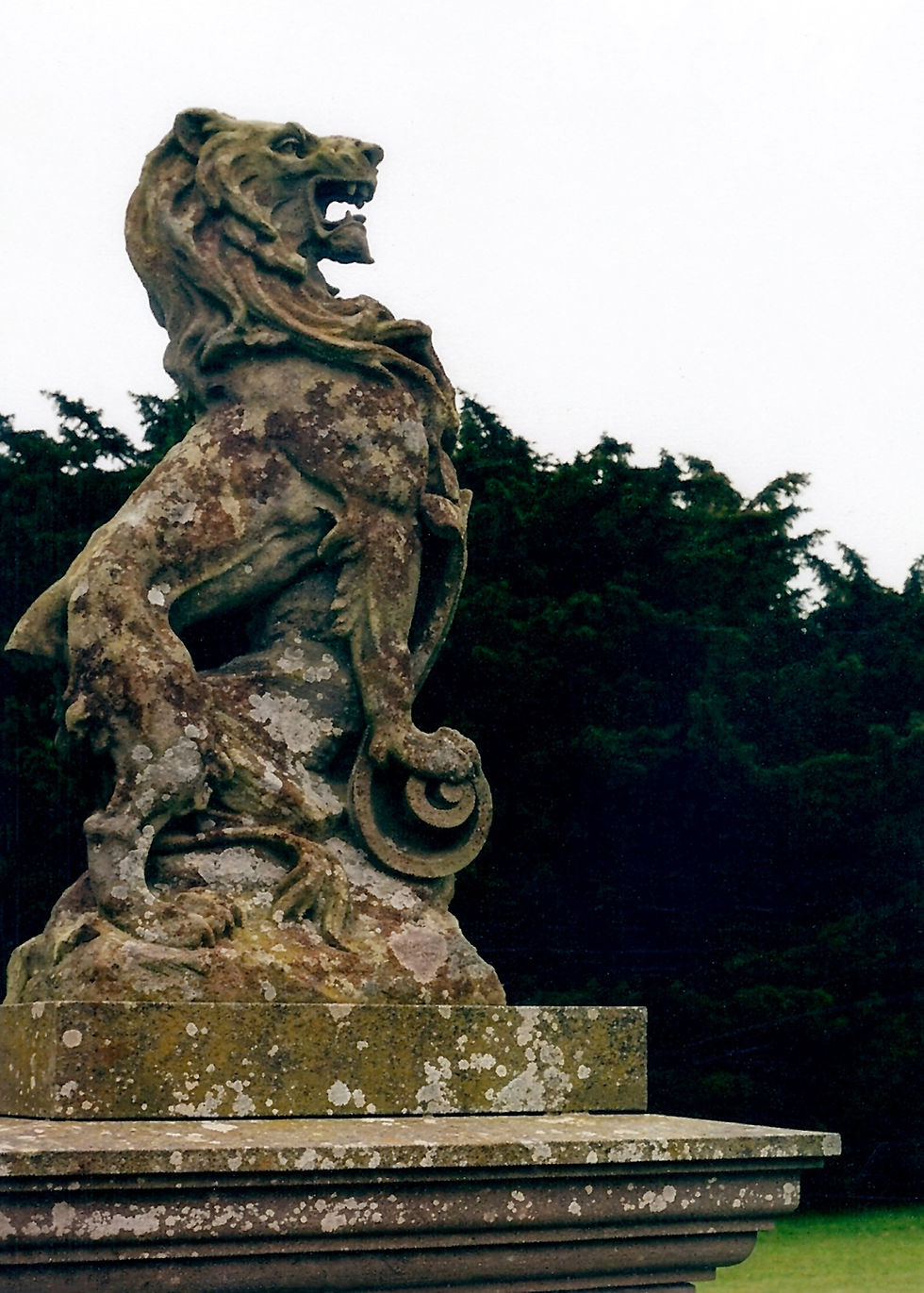
The castle is situated beside the village of Glamis in Angus, Scotland. It is the home of the Earl of Strathmore and Kinghorne, and is open to the public. Glamis Castle has been the home of the Lyon family since the 14th century, though the present building dates largely from the 17th century. Glamis Castle was the childhood home of Queen Elizabeth the Queen Mother. Her second daughter, Princess Margaret, was born there.
Ghost Stories
Many ghosts are said to haunt Glamis Castle; however, it’s believed there are at least nine who call the castle home. It is considered one of the most haunted places in Scotland. It is rumored that Earl Beardie continues to play cards in a secret room inside the castle. His shouts have been reported throughout the castle to this day. The Ogilvy Clan was sealed in a secret chamber after seeking refuge. It wasn’t until years later that their skeletons were discovered after noises were heard coming from the now sealed room. Visitors often feel extremely uneasy in this room. One of the most famous ghosts is known as the Grey Lady. It is thought to be the spirit of Lady Glamis, Janet Douglas, who was executed by burning for witchcraft, although the accusations were untrue.
Glamis, which inspired William Shakespeare’s Macbeth, is renowned for its rich history and distinguished visitors such as Mary, Queen of Scots, and James V. Explore the splendid castle and gardens, appreciate the majesty within the castle walls, and immerse yourself in six centuries of historical stories. It's only a brief drive from the main A90 road that connects Dundee and Aberdeen. Expect it to take around an hour and a half from Edinburgh or closer to two hours from Glasgow... glamis-castle.co.uk
Scottish Beaches
The east coast of Scotland boasts a breathtaking and diverse shoreline, with long stretches of sandy beaches, dunes, and coastal towns. This area is often marked by drier, warmer weather and a gentler terrain compared to the west. Notable attractions include the historic West Sands in St Andrews, the striking cliffs and sandy dunes of St Cyrus Nature Reserve, and Aberdour Silver Sands.
The Highlands
Exploring the Scottish Highlands provides a breathtaking journey, characterized by narrow, winding roads, single-track paths, and dramatic, rapidly changing scenery. We navigated through rugged, mountainous areas while dealing with tight spaces, unpredictable weather, and the frequent sight of sheep on the road.
Numerous remote roads are scarcely wide enough for a single vehicle. You need to use passing places—small pull-offs indicated by white or black-and-white signs—to allow oncoming vehicles to pass or let quicker locals overtake you. The Scottish Highlands are characterized by a dramatic, ancient landscape where towering mountain massifs merge with rolling green fields inhabited by the iconic, shaggy Highland cattle. This area is the most mountainous part of the United Kingdom, distinguished by steep, glacier-carved peaks and deep, narrow valleys known as glens.
Outer Hebrides
Traveling to the Outer Hebrides by ferry is a picturesque journey primarily operated by Caledonian MacBrayne. This trip involves crossing from mainland Scotland over the Minch or the Atlantic to various island ports. We traveled from Ullapool to Stornoway on the Isle of Lewis, the most popular route to the northern islands. The journey lasted about 2 hours and 45 minutes. Ferries provide excellent opportunities to spot seals, dolphins, basking sharks, and occasionally killer whales. The bigger ships include restaurants and observation lounges, providing a stable cruise through the Minch. Many travelers describe the crossing as the "start of something special" as they depart from the mainland.

History
The Hebrides were inhabited early in the history of the British Isles, possibly as far back as the Mesolithic era, around 8500–8250 BC, when the climate became favorable for humans. Structures potentially dating to as early as 3000 BC exist, with the most notable being the standing stones at Callanish, although some archaeologists classify the site as Bronze Age. Little is known about the settlers of the Hebrides, but they were likely of the same origin as those who settled the rest of Scotland. The earliest written reference to the Outer Hebrides comes from the Greek historian Diodorus Siculus in 55 BC. He described an island called Hyperborea, or "Far to the North," where a circular temple existed, and every 19 years, the moon seemed to be just above the earth, likely referring to the stone circle at Callanish.
Isle of Harris
The Isle of Harris, situated in the southern part of the largest Scottish island in the Outer Hebrides, is famous for its dramatic contrasts. It boasts renowned white-sand beaches, rugged mountains like Clisham, the tallest peak, and frequently surreal rocky landscapes in various areas. It offers a peaceful retreat infused with a lively culture, where the Gaelic language remains visible.
Am Bothan Bunk House
The Am Bothan is an independent bunkhouse and hostel located in Leverburgh at the southern end of the Isle of Harris. It is celebrated for its quirky, sea-themed atmosphere. The interior is filled with maritime memorabilia, including an intact wooden dinghy suspended from the double-height ceiling and portholes from local shipwrecks used in doors. It features a large open-plan living area with a wood-burning stove, coal burner, and massive windows offering views over the Sound of Harris. Located just a short walk from the Leverburgh ferry terminal, it is a popular base for travelers... ambothan.com
Callanish Stones
The Callanish Stones, called Calanais in Scottish Gaelic, are a prehistoric monument situated on the west coast of the Isle of Lewis. Built approximately 5,000 years ago during the Neolithic era, they predate England's Stonehenge and served as a ritual site for about 2,000 years. The monument is uniquely arranged in a cruciform pattern, often compared to a Celtic cross. At the center stands a massive stone, 16 feet tall and weighing around seven tonnes. This central monolith is encircled by a ring of 13 main stones, forming a circle with a diameter of about 42.7 feet. A long northern approach avenue, approximately 272.3 feet in length, features two roughly parallel rows of stones. Within the central circle is a small burial cairn, believed to have been added after the stones were erected. Modern research suggests the site may have functioned as an astronomical observatory.
Standing among the stones is frequently described as an intensely emotional, sensory, and spiritual experience. Numerous visitors often report sensing a palpable, albeit indescribable, energy. I personally experienced this sensation when I stood at the center of the stones... calanais.org
Harris Tweed
Harris Tweed is a type of tweed fabric that is handmade by locals in their homes in Scotland's Outer Hebrides. This fabric is finished in the Outer Hebrides and made from pure virgin wool, which is dyed and spun locally. The Harris Tweed Act of 1993 establishes and maintains quality standards for Harris Tweed and safeguards its name.
History
For centuries, islanders in the Outer Hebrides hand-wove a heavy wool cloth known as clò-mòr for protection against the harsh Scottish climate. Created by crofters for personal use or local barter, the fabric was unique for its use of local wool and natural dyes derived from plants and lichens like crottle, which gave the cloth its signature earthy colors and distinct scent. While the Industrial Revolution shifted mainland production to machines, the islanders maintained their traditional manual processes, ensuring a level of quality that would eventually catch the eye of the British aristocracy.
The industry’s commercial rise began in the mid-19th century when Lady Catherine Herbert recognized the marketing potential of the high-quality tweed. By commissioning local weavers to create garments for her estate staff and promoting the fabric to her social circle—including Queen Victoria’s peers—she transformed Harris Tweed into a fashionable staple for hunting and sporting wear. This transition from a local craft to a global luxury export led to improved training and quality control, peaking in the mid-20th century as a symbol of sustainable, handcrafted excellence.

Harris Tweed Authority
In the early 20th century, the rise of inferior "Stornoway tweed" made from mill-spun yarn threatened the reputation of traditional, hand-crafted Harris Tweed. To protect the industry, the Orb Trade Mark was established in 1909, ensuring the fabric was authentically produced across the Outer Hebrides. This protection was solidified by the Harris Tweed Act 1993, which created the Harris Tweed Authority to enforce strict standards. Today, the Authority continues to safeguard the brand's integrity by inspecting and hand-stamping every 50 meters of genuine cloth to verify it is made from pure virgin wool, dyed, spun, and hand-woven by islanders.
The Harris Tweed Story Room offers an immersive journey into the world of Harris Tweed, beginning with a short film that highlights the fabric's historical and modern narratives. We explored the industrial history and development of Harris Tweed, gaining insight into the intricate processes at the mills. A weaver provided a live demonstration, giving us the chance to observe the intricate craftsmanship firsthand. The tour elaborates on the specific processes within the mills and the regulations that define the roles of weavers, mills, and the overseeing authority, making this industry unique... harristweed.org
St. Clement's Church
St. Clement’s Church, situated in Rodel on the Isle of Harris, is considered the "grandest medieval building in the Western Isles" from the 16th century. Founded by Alasdair "Crotach" MacLeod, the 8th Chief of Clan MacLeod, this historic landmark is renowned for its medieval tombs, a prominent tower, and its status as one of the few pre-Reformation stone churches remaining in Scotland. The church largely fell into disuse after 1560, suffered a brief fire in 1784, but was restored in 1787 and again more recently.
Eilean Donan Castle
Upon returning to the mainland, one of our initial stops was Eilean Donan Castle, a renowned and frequently photographed fortress in Scotland. Situated in the western Highlands close to the village of Dornie, it rests on a small tidal island where three major sea lochs meet: Loch Duich, Loch Long, and Loch Alsh. An arched stone footbridge links the castle to the mainland. During high tide, the castle seems to "float" above the water, almost enveloping the entire island.
The site was initially home to a 6th-century Christian cell established by Saint Donnán. The first fortified castle was constructed in the 13th century to protect against Viking invasions. In 1719, during a Jacobite uprising, Spanish troops occupied the castle, which was subsequently destroyed by the British Royal Navy using gunpowder. After remaining in ruins for 200 years, it was carefully restored by Lt. Col. John MacRae-Gilstrap between 1912 and 1932. The castle is often used as a filming location, notably appearing as the residence of Clan MacLeod in Highlander... eileandonancastle.com
Wallace Monument
The National Wallace Monument is a 220-foot tower in Victorian Gothic style situated near Stirling, Scotland. Finished in 1869, it commemorates Sir William Wallace. Positioned on Abbey Craig, it provides a view of the location where Wallace triumphed in the 1297 Battle of Stirling Bridge. The monument includes a 246-step spiral staircase, the Hall of Heroes, and the 5-foot-4-inch Wallace Sword.
Visitors reach the site on foot from the base of Abbey Craig, a rocky outcrop above Cambuskenneth Abbey. The monument's crown features a viewing gallery that offers sweeping views of the Ochil Hills and the Forth Valley. Designed by architect John Thomas Rochead in the Gothic Revival style, the tower was built after a fundraising campaign that coincided with a revival of Scottish national identity in the 19th century. The original Victorian statue of Wallace, crafted by Edinburgh sculptor David Watson Stevenson, stands at the corner of the monument. Within the tower, colorful stained glass windows are prominently featured, especially on the levels of the Hall of Arms and the Hall of Heroes, displaying renowned Scottish figures and heraldic designs... nationalwallacemonument.com
Stirling Castle
Stirling Castle, situated on a volcanic crag in Stirling, Scotland, is a leading historical fortress and former royal residence of great significance. It was the childhood home of Mary Queen of Scots and a preferred residence of the Stewart kings. The castle features impressive 15th-century buildings, such as the Great Hall, a restored Royal Palace, and offers sweeping views of the surrounding landscape.
Ghost Stories
Stirling Castle is renowned as one of Scotland's most haunted sites, with tales centered around tragic, ghostly figures. The most well-known spirits are the "Green Lady" and the "Pink Lady." The Green Lady is believed to be a servant girl from the 1500s who died while trying to save Mary, Queen of Scots, from a fire in her bedchamber. She is often seen roaming the castle, sometimes accompanied by the smell of fire. Some stories also suggest she was a lady-in-waiting who leapt from the battlements due to forbidden love. The Pink Lady is a ghostly figure in a pink dress, often seen as a woman searching for her husband, possibly a widow from the 1304 siege by Edward I. She is frequently observed taking the path from the castle to the nearby Church of the Holy Rude at Ladies' Rock.
The Great Hall at Stirling Castle showcases twin thrones on the elevated dais at the east end, celebrating the Stewart monarchy. Completed in 1503 for James IV, these thrones are set beneath a hammer-beam ceiling, offering a view of the hall where banquets and receptions were held. The hall is heated by five fireplaces, with the main one warming the area reserved for the monarch.
Highland Cattle
Highland cattle, hailing from Scotland, are a resilient and historic breed distinguished by their long, shaggy, double-layered coats that typically appear in red, black, or yellow, along with their long, curved horns. These medium-sized cattle excel in harsh environments and are frequently used for conservation grazing. Known for their longevity, they can live up to 20 years. Despite their distinctive appearance and lengthy horns, Highlands are regarded as friendly and gentle animals.
Urquhart Castle
Urquhart Castle, once one of Scotland's largest, endured considerable turmoil over its 500-year history as a medieval fortress. Throughout the Wars of Independence, ownership of the castle alternated frequently between the Scots and the English. Power struggles continued, with the Lords of the Isles frequently attacking both the castle and the glen until the 1500s. The final government troops stationed there during the Jacobite Risings demolished the castle when they left. Today, the iconic ruins of Urquhart offer glimpses into medieval life and the experiences of its noble residents.
Loch Ness
Loch Ness is an expansive freshwater loch spanning 23 miles, renowned for its deep, dark waters, breathtaking landscapes, and the enigmatic, legendary Loch Ness Monster. It holds the title of the UK's largest body of water by volume and remains unfrozen due to its depth. As a segment of the Caledonian Canal, it offers scenic opportunities for boating and hiking near the ruins of Urquhart Castle. We had the thrilling opportunity to take a boat ride on this famous loch.
Glasgow and the Return Home
On our final night in Scotland, we wandered through the streets of Glasgow to experience the local nightlife. To celebrate my 18th birthday, we spent the evening at The Shack, enjoying electronic music and dancing. This popular nightclub on Sauchiehall Street in Glasgow was famous for its vibrant atmosphere and was considered a key part of the city's nightlife until it closed. It was located in a historic building that, unfortunately, experienced a significant fire in 2004, necessitating a substantial emergency response. The venue is fondly remembered as a lively component of Glasgow's nightlife scene.
As we wrap up our journey through Scotland, we reflect on the stunning landscapes, rich history, and vibrant culture that define this extraordinary land. From the rugged Highlands to the tranquil lochs, each area boasts its own unique charm and tales waiting to be uncovered. The warmth of the Scottish people, their traditions, and the echoes of their history have left a lasting impression on us. Whether exploring ancient castles, enjoying the flavors of local cuisine, or listening to the haunting melodies of traditional music, our adventure has been a tapestry of unforgettable experiences. Scotland, with its enchanting beauty and deep-rooted heritage, invites all who visit to create their own memories and carry a piece of its magic with them forever.


Comments